For decades, dark energy has remained one of the most perplexing puzzles in cosmology. This mysterious force is thought to drive the accelerated expansion of the universe, yet its true nature continues to elude scientists. Now, a powerful combination of artificial intelligence and the forthcoming Vera C. Rubin Observatory is poised to transform our understanding. By rethinking the role of Type Ia supernovae as 'standard candles' and venturing into the realm of 'unknown unknowns,' researchers hope to uncover missing ingredients in the cosmic recipe and finally solve the dark energy enigma.
The Mystery of Dark Energy
Dark energy is estimated to constitute nearly 70% of the universe's total energy density. Its existence was discovered in the late 1990s through observations of distant supernovae, which revealed that the universe's expansion is not slowing down under gravity but rather speeding up. Despite its profound implications, the fundamental physics behind dark energy remains unknown. Some theories propose it as a cosmological constant—a property of empty space—while others suggest modifications to general relativity or entirely new fields. To distinguish between these possibilities, astronomers need precise measurements of cosmic expansion over time, and that is where Type Ia supernovae become indispensable.
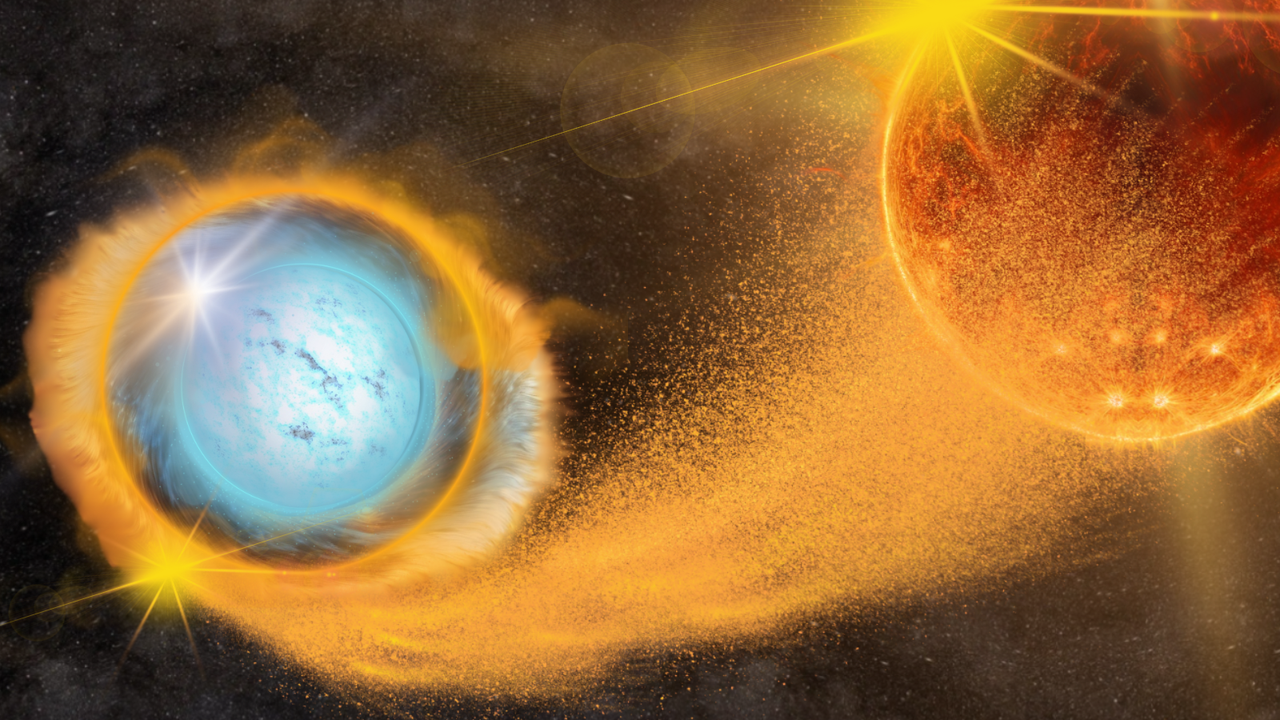
Type Ia Supernovae as Cosmic Measuring Sticks
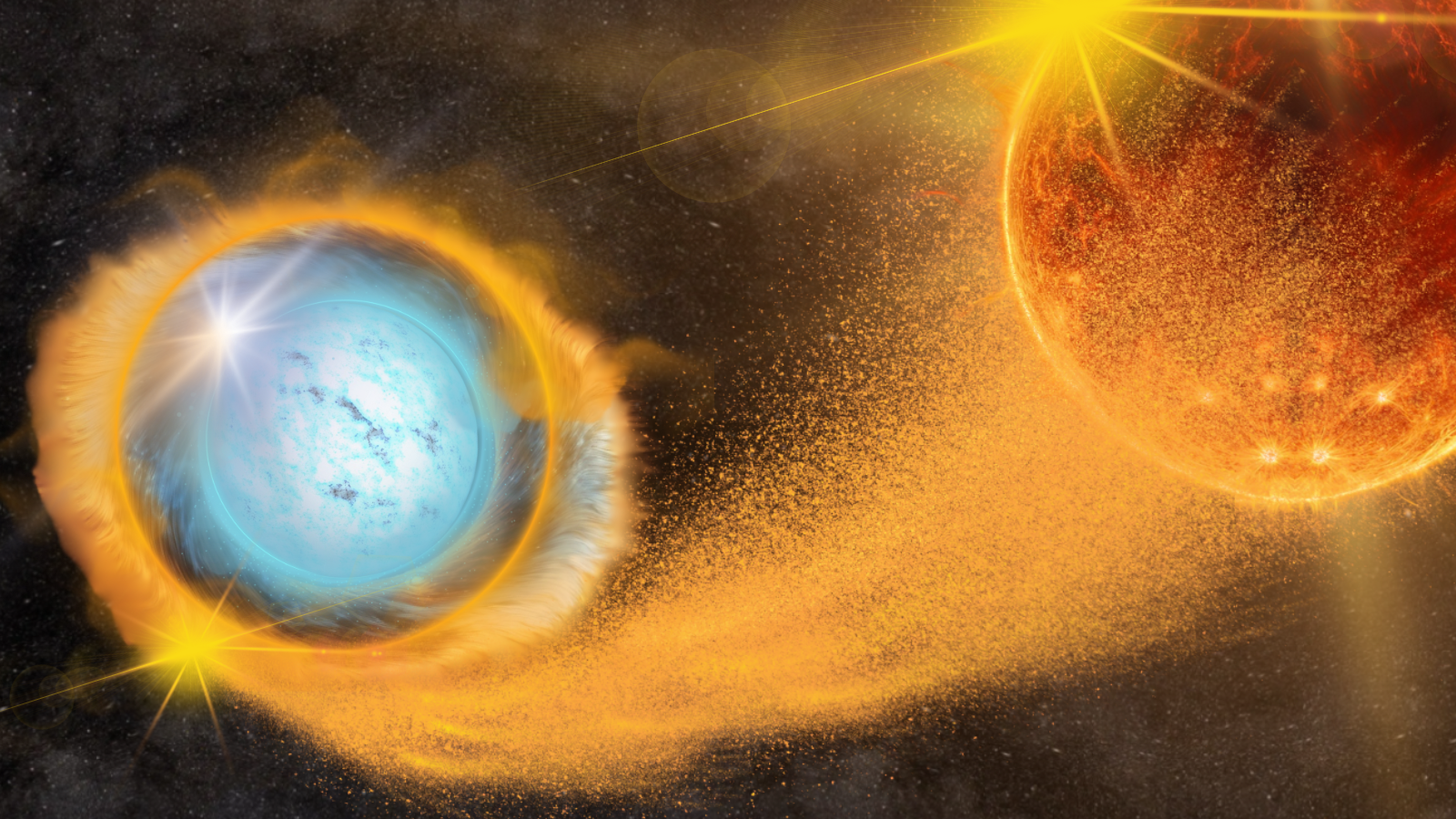
Type Ia supernovae occur when a white dwarf star in a binary system accretes matter from its companion until it reaches a critical mass and detonates in a thermonuclear explosion. Because the mass at detonation is nearly uniform, the peak brightness of these explosions is remarkably consistent, making them superb 'standard candles'—objects of known intrinsic luminosity. By comparing their observed brightness with their known brightness, astronomers can calculate the distance to the supernova and, by extension, the expansion rate of the universe at the time the light was emitted.
The Problem with 'Standard Candles': Unknown Unknowns
While Type Ia supernovae have been the backbone of dark energy research, they are not perfect. Variations in the chemical composition, explosion geometry, or surrounding environment can introduce subtle differences in their brightness. These 'unknown unknowns'—factors we haven't even thought to check—may skew distance measurements and lead to incorrect conclusions about dark energy. Traditional methods rely on empirical corrections, but a new approach uses AI to identify and account for hidden biases in large datasets, promising cleaner data and more reliable cosmic yardsticks.
Enter the Rubin Observatory
The Vera C. Rubin Observatory, currently under construction in Chile, is designed to conduct the Legacy Survey of Space and Time (LSST). Over ten years, it will image the entire southern sky every few nights, capturing billions of galaxies and tens of billions of stars. This unprecedented dataset will include millions of supernovae—orders of magnitude more than current surveys. With such a vast trove, even subtle patterns or anomalies become statistically significant, allowing scientists to probe the fine details of supernova behavior and cosmic expansion.
Massive Data and the Need for AI
The sheer scale of Rubin's data presents both an opportunity and a challenge. Traditional analysis methods cannot keep pace with the flood of images and light curves. Here, artificial intelligence becomes essential. Machine learning algorithms can automatically classify supernovae, measure their properties, and flag outliers for further inspection. More importantly, AI can discover correlations and patterns that human eyes might miss—especially the elusive 'unknown unknowns' that could reveal systematic errors or even new physics. By training neural networks on simulated and real data, researchers hope to develop robust models that separate intrinsic supernova diversity from genuine cosmological signals.
AI's Role in Uncovering Hidden Patterns
One key strategy is to use deep learning to analyze the full spectral and temporal evolution of supernovae, rather than relying on a few brightness parameters. This approach can detect subtle effects like ejecta asymmetries or varying nickel abundances that affect brightness. By mapping these influences, AI can refine the standard candle calibration and reduce systematic uncertainties. Additionally, unsupervised learning techniques can group supernovae into subtypes, each with its own luminosity correction, improving distance estimates. As described in the previous section, this method directly addresses the 'unknown unknowns' that have long troubled cosmologists.
Toward a New Recipe of the Cosmos
By combining Rubin's vast supernova sample with AI-driven analysis, scientists aim to construct a more accurate 'cosmic expansion history'—a timeline of how fast the universe has expanded at different epochs. This history is the key test for theories of dark energy. If the expansion pattern deviates from the simple cosmological constant model, it could point to alternative explanations, such as evolving dark energy or modifications to general relativity. The missing ingredients in our current recipe—the true nature of dark energy—may finally be identified. The Rubin Observatory is expected to begin operations in the mid-2020s, and with AI at the helm, the quest to understand the universe's accelerating expansion has never been more promising.
In summary, the synergy of artificial intelligence and the Rubin Observatory offers a powerful new lens through which to examine Type Ia supernovae. By rethinking these standard candles and actively hunting for unknown unknowns, we stand on the cusp of a new era in cosmology—one where the mystery of dark energy may finally yield its secrets.